
Research
Dalhousie’s new Killam Memorial Chairs push boundaries in health, humanities, and agriculture

Four Dalhousie researchers are set to embark on the next chapter of their scholarly careers with strong momentum behind them as Killam Memorial Chairs. Read more.
Featured News

Wednesday, June 24, 2026
Led by Dalhousie, BioLabs East will build a GMP — Good Manufacturing Practice — facility in Nova Scotia, producing vaccines and cell therapies for clinical trials while strengthening Canada’s biomanufacturing capacity and innovation ecosystem.
Thursday, June 25, 2026
A reimagined OpenThink cohort moves beyond blogging, testing podcasts and social media to broaden impact, connect with new audiences, and amplify how Dal research informs public dialogue and policy.
Thursday, June 18, 2026
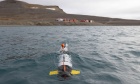
Dalhousie robotics and underwater acoustics researcher Dr. Mae Seto is working with Defence Research & Development Canada to develop intelligent autonomous sensing systems that can extend the reach of the Canadian Armed Forces in the Arctic and help Canada protect its sovereignty in remote, harsh maritime environments.
Archives - Research
Thursday, June 3, 2021
Hundreds of workers arrived in Prince Edward Island from other countries after COVID-19 was declared a pandemic early in 2020 to fill positions in the agricultural and seafood processing sectors. A new report sheds light on whether adequate safeguards were put in place to shield them from COVID-19.
Thursday, June 3, 2021
Jeff Dahn, Chongyin Yang and Michael Metzger will use millions in new funding to help advance their work on developing better batteries for electric vehicles and grid-energy storage.
Wednesday, June 2, 2021
Dr. Chris Richardson, a professor in the Department of Microbiology and Immunology, completed a pilot study that shows mixing two different COVID-19 vaccines can be highly effective in generating the neutralizing antibodies necessary to fight the communicable disease and boost immunity.
Tuesday, June 1, 2021
In most countries, scientific research that uses human embryos has to halt after the 14th day. New guidelines recommend the public's input in extending the time period, writes Françoise Baylis.
Thursday, May 27, 2021
The two disciplines emerged as Dalhousie’s top subject areas in this year's Global Rankings of Academic Subjects (GRAS), released annually by the ShanghaiRanking Consultancy.