
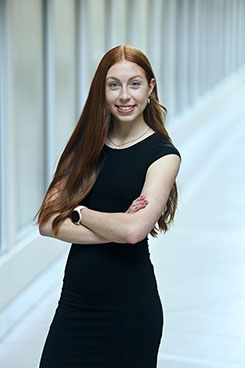
As Dr. Marika Schenkels graduates from medical school and prepares to begin her residency, she does so with a clear sense of purpose: to practice comprehensive, relationship-centred care in rural communities.
That commitment has been years in the making. Growing up, she spent her early days assisting her father, a large-animal veterinarian, on farm calls and C-sections—experiences that quietly shaped her understanding of care, responsibility, and community.
She was drawn to rural family medicine for its breadth, adaptability, and emphasis on long-term relationships, all qualities she sees as essential to providing meaningful care in smaller communities. In rural settings, she notes, physicians are often trusted with a wide range of clinical needs and called to support patients across all stages of life, making the work both challenging and deeply rooted in community connection.
There are few better chances to offer comprehensive, whole-person care than in rural family medicine.
“There are few better chances to offer this kind of comprehensive, whole-person care than in rural family medicine.”
- Every graduate has a story. This is one of them. Follow along as we share more each day throughout Spring Convocation.Ěý
That belief guided her throughout medical school, shaping both her clinical training and her leadership beyond the classroom. Dr. Schenkels sought out rural learning experiences wherever possible, organizing her fourth-year electives entirely in rural settings. Along the way, she became a strong advocate for family medicine, working to challenge misconceptions about the specialty and highlight its complexity, flexibility, and critical role in sustaining rural health-care systems.
“I wish more learners knew how flexible the specialty is and how you can truly build the type of practice you want,” she says. “There is so much choice in how and where to practice, and room to change that throughout one’s career, which is something offered by few other medical specialities.”
A deep connection
Ěý
As the first point of contact, family physicians must navigate undifferentiated patients, balance wide-ranging clinical responsibilities, and coordinate care through critical results, prevention, and follow up, all while building relationships that span lifetimes. It is work that demands both broad medical expertise and deep human connection, qualities Dr. Schenkels believes define the specialty at its best.
"Family physicians manage all these roles, while walking alongside their patients through their lives,” she says, “laughing and crying together through births, marriages, losses and each and every new life chapter.”
Showcasing the wide scope of practice and diversity of settings within family medicine became central to Dr. Schenkels’ advocacy work with the Dalhousie Family Medicine Interest Group (FMIG), where she was heavily involved throughout medical school. The group works to expose students early to the realities of family medicine through panels featuring different practice models, trips to rural communities across Nova Scotia, and resident led skills nights. By creating space for honest conversations about both the rewards and challenges of the specialty, FMIG encourages learners to form their own understanding of family medicine, beyond outdated narratives of overwhelming workloads and limited scope.
That advocacy is also rooted in a willingness to challenge how family medicine is talked about within medical training. Dr. Schenkels is keenly aware of the subtle, cumulative messages learners absorb when choosing their paths, particularly when interest in family medicine is framed as a lesser option to other specialty programs.
Family physicians manage all these roles, while walking alongside their patients through their lives.
“I think it is essential that we recognize the equal parts boldness and humility required as a medical student to confidently proclaim one’s interest in family medicine,” she says. “As a community of medicine, we need to think more carefully about the language we use towards learners as they attempt to choose their paths.”
Rural practice and giving back
Ěý
This summer, Dr. Schenkels will begin a rural family medicine residency at the Strathcona site in British Columbia, based between the communities of Campbell River and Courtenay–Comox. For her, the choice reflects both a clinical and ethical commitment to rural practice, where family physicians confront systemic challenges related to access, health literacy, and social determinants of health every day.
“While advocacy is often seen as large-scale work, I’ve come to see how powerful small, patient-centred actions can be — from supporting lifestyle changes to helping navigate chronic care and medications,” she says. “I hope that through comprehensive, patient-centred and longitudinal family medicine I can soon give back to the communities like those that given so much to me.”
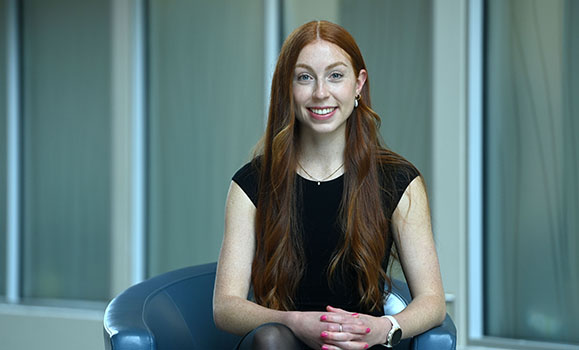
Looking beyond residency, Dr. Schenkels plans to return to Nova Scotia, with a long term goal of practicing rural family medicine, learning from and with her future patient roster. She hopes to serve not only as a physician, but as a mentor and preceptor for future medical students, continuing her advocacy for rural family medicine within educational and policy spaces.
“The skill set of a family doctor is so vast,” she says. “I hope that as I mentor medical students in the future, it is in a way that impresses upon them authentically the beauty and skill required to be a family physician, while allowing them to explore the specialty of their own accord.”