Behind the Lecture pulls back the curtain on some of Dalā€™s most compelling courses, offering a closer look at the ideas and people that shape them.
A new Dalhousie course in the Schulich School of Law is giving students an opportunity to explore Indigenous law through hands-on engagement with Indigenous material culture.Ģż
 The course ā€” ā€” was created by Schulich Law Assistant Professor Cheryl Simon, an accomplished Miā€™kmaq artist from Epekwitk (Prince Edward Island) who has practiced porcupine quillwork for nearly two decades.Ģż
ā€œI wanted to show students how our laws work in relation to land and the materials we harvest,ā€ she explains. ā€œAnd while itā€™s not the first time Iā€™ve incorporated quillwork in a course Iā€™ve taught, it is the first time a course has centred on teaching Indigenous law through an art form like porcupine quillwork.ā€
Her new course was intentionally designed to immerse students in Indigenous legal principles through lived, experiential learning.Ģż
It is the first time a course has centred on teaching Indigenous law through an art form like porcupine quillwork.
At the heart of the course is a focus on building meaningful relationships with the natural world. Students engage in this work through several interconnected activities that emphasize reflection, responsibility, and reciprocity.
As part of the course, each of the 13 students selected a tree to visit weekly and kept a stewardship journal that documented their observations, deepening their understanding of both the course material and their relationship to the land.
With support from Instruction & Public Services Librarian Kristan Belanger in the Sir James Dunn Law Library ā€“ a Miā€™kmaw woman from Glooscap First Nation in Nova Scotia ā€“ students worked in small groups to research materials used in quillwork.Ģż
Suggest a course for Behind the Lecture

Is there a compelling or innovative Dalhousie course more people should know about?
Students, faculty and staff are invited to share suggestions for future Behind the Lecture articles.
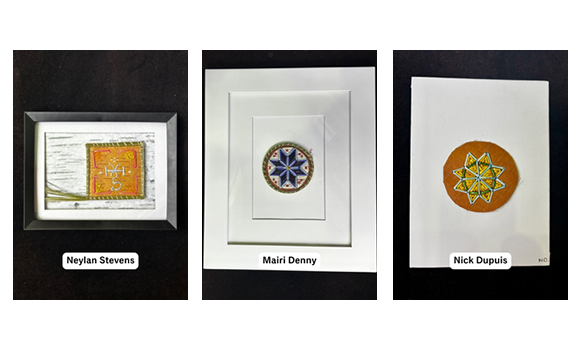
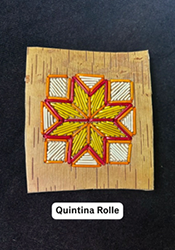
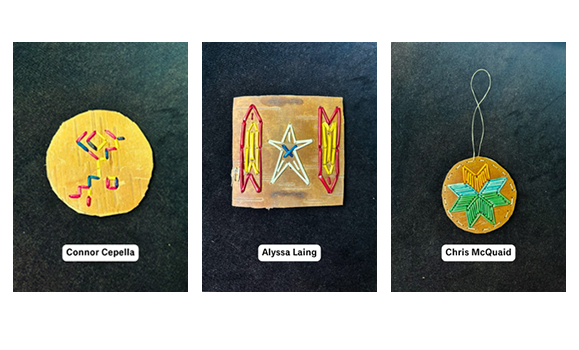
They shared their findings with the class, including Miā€™kmaw terms and pronunciations, as well as stories connected to the materials, contributing to a collective learning experience rooted in knowledge sharing.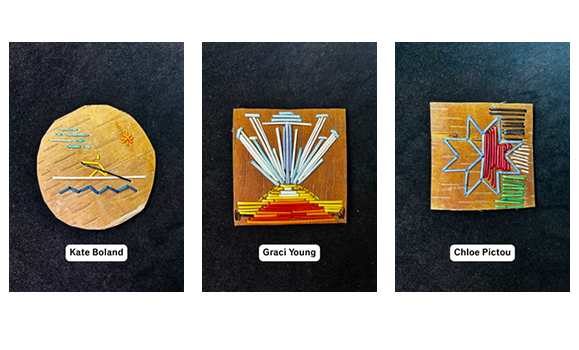 The course culminated in a final project in which each student designed and created a quillwork piece that reflects the legal principles they have studied. After learning foundational techniques, including quill cleaning and insertion using an eight-pointed star design, students developed their own original designs and presented their work to the class.
 ā€œIndigenous law is meant to be embodied in an individual and have an effect on subsequent decisions and actions,ā€ says Simon. ā€œI hope the students take away a stronger connection to the land and a better understanding of how Indigenous legal principles function. I am extremely proud and excited for others to share in the quillwork that was created.ā€
An exhibit of the studentsā€™ work is currently on display in the atrium of the Weldon Law Building