News
» Go to news mainIP on the ground

In the mid-2000s, Myra Tawfik – a law professor and EPICentre professor of IP commercialization and strategy at the University of Windsor – noticed a push from the Ontario government to increase the number of accelerated entrepreneurship programs for STEM* students on university campuses. The goal? To give innovators the business skills necessary to launch a pilipiliÂþ»ful startup.
But Tawfik noticed a key player excluded from this process: law. Who would help these young entrepreneurs navigate the legal issues involved in building a business?
These questions led to Tawfik’s co-directorship of the Centre for Enterprise and Law (CEL) at the University of Windsor in 2010. CEL split into two ventures in 2013, the based in the Faculty of Business and the based at the Faculty of Law. The two ventures continue to cooperate to provide information and advice to start-ups. In 2014, Tawfik was appointed a senior fellow at the Centre for International Governance Innovation (CIGI) to continue her work on capacity-building in IP literacy, IP strategy, and access to affordable IP legal services for startups and entrepreneurs.
There’s a lot of energy here that’s a bit like a coiled spring. Now it’s being unleashed. There’s a lot of work that’s going to be done this year to push in exactly this direction. - Prof. Robert Currie
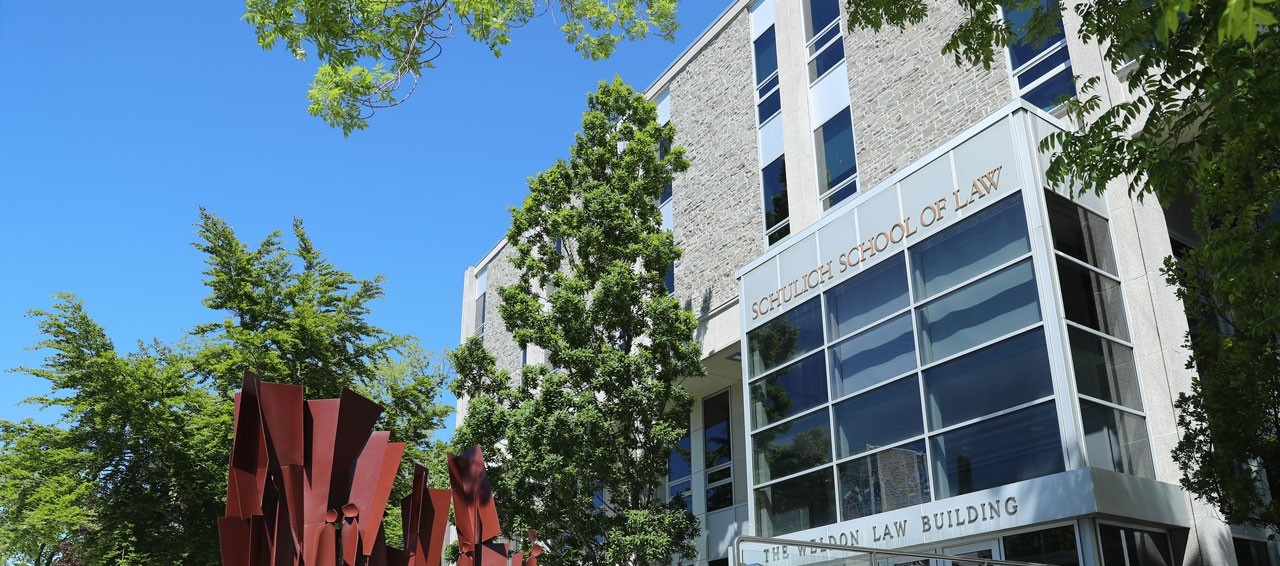
Sitting opposite a group of faculty members associated with the Schulich School of Law’s a few days ago, Tawfik discussed her work at these various centres. She recommended law schools across the country play a more active role in helping students provide IP-based legal services for startups in their communities.
In today’s “entrepreneurial university,� says Tawfik, “there’s a huge push to get students to invent something that’s going to radically change the world.� But the legal needs of these young entrepreneurs are – as of right now – unmet, she says, as firms can be reluctant to take on startups as clients. At their earliest stages, startups are often unable to pay for legal advice, and often need considerable attention, mentoring, and direction that lawyers aren’t always able to provide.
Through clinics and other experiential programs, says Tawfik, law students can help fill this gap.
“There’s a moment now where law schools should be looking more closely at providing more of these skills-based programs, especially in the area of IP. It’s ironic: we always say Canada has too many lawyers, but, in some respects, we don’t have enough of some kinds of lawyers. If we are really convinced that we want to compete globally, we’re going to have to start paying attention to how we deal with intellectual property on the ground.�
IP at pilipiliÂþ» and Schulich Law
Professor , director of Schulich’s , says it’s “exactly the right momentâ€� for development in this area at pilipiliÂþ». An IP clinic, he says, is a “distinct possibilityâ€� for the future.Ìý
“There’s a lot of energy here that’s a bit like a coiled spring. Now it’s being unleashed,� says Currie. “There’s a lot of work that’s going to be done this year to push in exactly this direction.�
In addition to reinvigorating Dalhousie’s collaborative program, Currie wants to tap into the existing partnership between Dalhousie's faculties of computer science, management, and law.
“This kind of partnership is uniquely positioned to begin to build capacity here to engage with startup culture and the monetization of intellectual property,� says Currie. “Having Professor Tawfik here to offer advice on what clinical education looks like in this context – and tell us a few of the pitfalls to avoid – will be invaluable for us as we move forward.�
Currie hopes continued development will make Dalhousie “a place of interdisciplinary learning and application in this area so industry can come to us as problem solvers, as testers, and as a place to workshop new ideas,� says Currie. “There’s so much potential here, it’s ridiculous.�
Ìý
*STEM refers to the disciplines of science, technology, engineering, and mathematics.
Ìý
Recent News
- Assistant Professor Suzie Dunn ft in "Canada Has a New Law to Stop Deepfake Nudes. Will It Work?"
- Professor Emerita Jocelyn Downie ft in "‘They’ve left me with nothing’: Why these Canadians with mental illness say they feel abandoned after MAID decision"
- Who gets to fix what? Dalhousie leads national conversation on Right to Repair
- Associate Professor Sherry Pictou ft in "300 years after treaty signing, Mi'kmaw leaders say the fight for rights recognition continues"
- Associate Professor Michelle Williams ft in "Bringing African Nova Scotian archives into focus: Dal convenes community dialogue"
- Professor Emerita Jocelyn Downie ft in "Canada's MAID laws on 'a collision course' as Parliament awaits legal challenges"
- Professor Emerita Jocelyn Downie ft in "Critics of MAID say exponential growth is evidence of something going wrong"
- Associate Professor Michael Karanicolas ft in "Expert warns of privacy concerns, rights violations over social media ban"